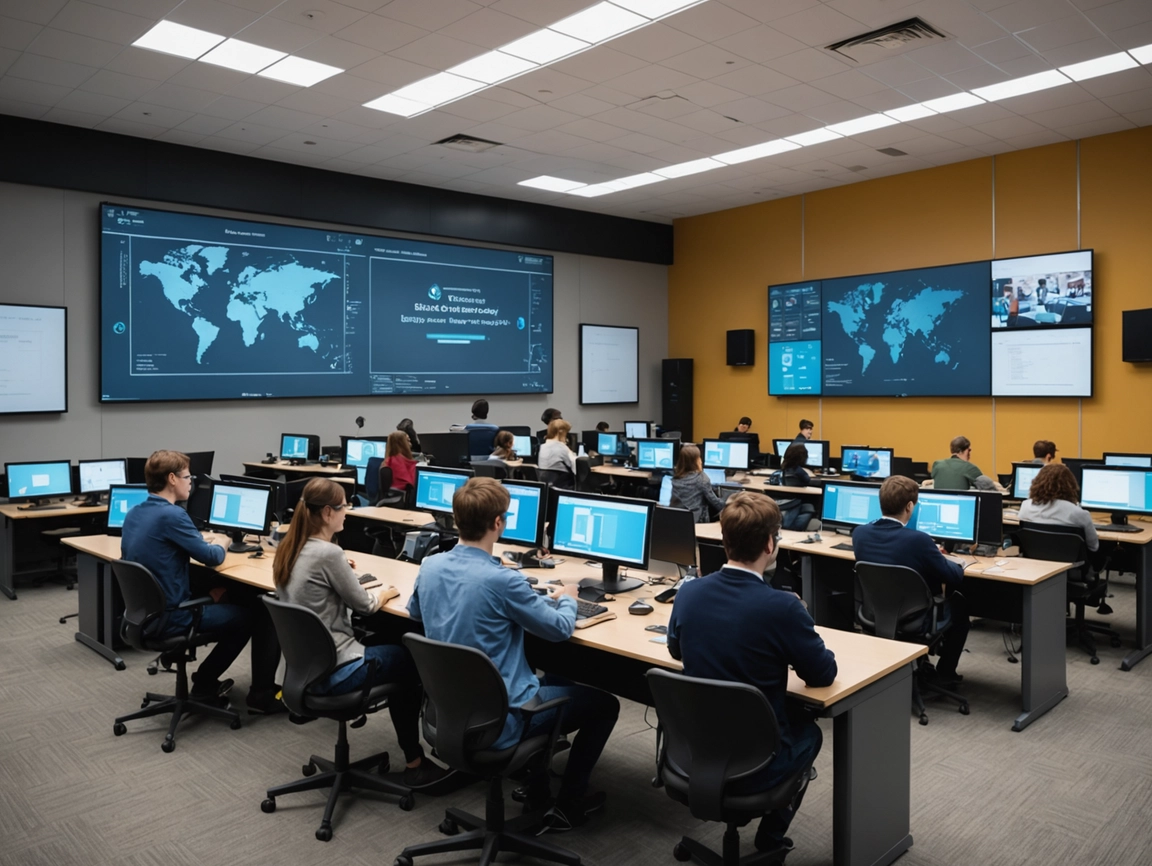
Online Higher Education Trends: Navigating Innovations, Challenges, and Implications

Facebook
Twitter
LinkedIn
Pinterest
Tumblr
Telegram
Online Higher Education Trends

Welcome aboard the journey into the ever-evolving landscape of higher education in the digital age. As online learning emerges as a transformative force, institutions are redefining student engagement and education. Embark on a exploration of the dynamic world of digital education, uncovering the innovative approaches steering the course of online higher education.

Unveiling the Advantages of Online Platforms

Charting our course, we first set sail to uncover the boundless advantages presented by online platforms. The allure of flexibility takes center stage, empowering students to tailor their studies around work, family, and personal commitments. This newfound flexibility empowers learners to chart their academic journey on their terms, pursuing their aspirations unfettered.

Furthermore, the horizon of accessibility beckons. Geographical barriers dissolve as students across the globe access top-tier courses, fostering a global tapestry of learning. With the world as their classroom, a new era of interconnected education unfurls.

Navigating Challenges in the Digital Seas

Yet, every voyage encounters challenges, and online higher education is no exception. Anchoring our exploration in the realm of virtual learning challenges, the pursuit of quality and interactivity emerges as a paramount concern. Rigor and engagement must thrive in the digital realm, driven by inventive pedagogical strategies such as immersive discussions and virtual group endeavors.

Adaptation becomes our guiding star as the digital frontier shifts ceaselessly. Educators and institutions navigate uncharted waters by embracing evolving technologies and emerging best practices. Adapting is not just a choice, but a compass pointing toward progress.

Shaping Traditional Education’s New Horizons

The winds of change reshape even the steadfast shores of traditional education models. The ascent of online learning prompts a reimagining, birthing innovations that enrich all students. The concept of blended learning surfaces, harmonizing digital and in-person instruction to craft a bespoke educational experience.

Moreover, the ripple effect extends globally, transcending boundaries. Physical distance no longer dictates educational pursuits, as online platforms level the academic playing field. The democratization of education empowers individuals and propels society forward.

In Conclusion

As our voyage through the uncharted waters of online higher education draws to a close, a horizon of promise and enthusiasm unfolds. The advantages of online platforms, propelled by ever-evolving technology and pedagogy, chart a future where education radiates accessibility and inclusivity. With these trends in sight, let’s embrace the voyage, navigate the challenges, and seize the opportunities that beckon. May our sails be full and our course steady!

Related Posts
Awareness

Problem with Outdated University Education

The Problem with Outdated University Education — And How We Solved It Higher education is meant to prepare students for the real world. Yet in many traditional universities, curriculum updates happen every few years. In fast-moving fields like technology, healthcare, business, and public policy, that delay means students may be learning frameworks that no longer reflect current research or industry realities. At The Continents States University, we built a different model. Our proprietary system, Continents AI, is grounded in the most recent peer-reviewed research, verified academic publications, and real-world validated findings. Students are not learning recycled textbook summaries — they are engaging with knowledge aligned to current evidence and contemporary standards. Unlike general-purpose AI systems trained on broad internet data, Continents AI is grounded in curated academic sources and curriculum-aligned research. This ensures: The results show near-perfect academic accuracy and curriculum alignment — because the system is designed for education, not entertainment. Many AI systems will write essays, complete assignments, and generate quiz answers. That may appear helpful — but it weakens learning and compromises integrity. Continents AI does not: Instead, it guides students to research, reinforces methodology, and calibrates feedback using Bloom’s Taxonomy standards. With an extremely low hallucination rate and zero false citations, the system protects academic credibility — something general-purpose AI tools cannot guarantee. Traditional universities revise curriculum periodically. Continents AI aligns responses continuously with: Students learn what is relevant now — not what was standard five years ago. Modern employers demand: An education grounded in outdated material cannot meet those expectations. By combining real-time research integration with built-in academic integrity safeguards, Continents AI ensures that students learn information that is accurate, current, and professionally applicable. Higher education must evolve. At The Continents States University, it already has. Apply Now!

Read More
Academic Degrees

What Skills Can You Gain From Earning A Master’s Degree?

Pursuing a master’s degree is a strategic investment in your future, offering advanced skills and knowledge that set you apart in today’s competitive job market. Beyond subject expertise, it enhances critical thinking, research capabilities, and leadership potential, preparing you for career advancement or a transition into a new field. Career Advancement Through Specialized Knowledge A master’s degree equips you with specialized knowledge and technical skills tailored to your industry. Programs like the Master of Science in Business Administration or Master of Arts in Organizational Leadership focus on advanced analytical skills, strategic thinking, and leadership development. These competencies often lead to better job prospects, higher earning potential, and the ability to take on senior roles. Employers value the depth of expertise that comes with advanced education, making you a strong candidate for promotions and specialized positions. Networking Opportunities for Professional Growth Networking is a key benefit of pursuing a master’s degree. Around 60% of professional opportunities arise through connections, and graduate programs provide a platform to build relationships with peers, faculty, and industry professionals. Alumni networks, professional organizations, and industry events further expand your connections, opening doors to mentorship, job referrals, and collaborative projects that can accelerate your career growth. Essential Skills for Long-Term Success A master’s program hones both hard and soft skills, including: Critical Thinking: Advanced coursework and research projects enhance your ability to analyze complex problems and develop innovative solutions. Leadership: Group projects and collaborative assignments build emotional intelligence, communication, and team management skills. Time Management: Balancing coursework, research, and professional commitments teaches you to prioritize tasks and meet deadlines efficiently. Adaptability: Exposure to diverse perspectives and evolving challenges prepares you to thrive in dynamic work environments. Conclusion A master’s degree is more than an academic achievement—it’s a transformative experience that equips you with the skills and connections needed to excel in your career. Whether you aim to climb the corporate ladder, switch industries, or launch entrepreneurial ventures, the advanced education and professional development gained through a master’s program position you for long-term success.

Read More