

Connecting With Professors Outside the Classroom: Building Relationships with College Professors

Facebook
Twitter
LinkedIn
Pinterest
Tumblr
Telegram
building relationships with college professors
Your professors are more than lecturers. They are mentors, advisers, and future references.

Your professors are more than lecturers. They are mentors, advisers, and future references. Students who know their professors get better guidance, stronger recommendation letters, and a heads-up on research and job openings. Building those ties takes a little effort.

Go to office hours. This is the simplest step and the most skipped. Bring a real question about the material or the field. Prepared students stand out. Even a short visit helps a professor put a name to a face.

Speak up in class. Ask questions, join discussions, and show you are thinking. Professors remember students who engage. You do not have to talk every day. Thoughtful comments beat constant chatter.

Ask for advice, not just grades. Professors can guide you on majors, internships, graduate school, and careers. Tell them your goals and ask what steps they suggest. Most enjoy helping students who take initiative.

Do good work on time. Reliability builds trust. A professor who sees steady, quality work is far more likely to write you a strong letter or invite you onto a project. Missed deadlines and excuses do the opposite.

Follow up. Thank them after helpful advice. Update them when their tip pays off. If you need a strong letter of recommendation later, a professor who knows you can write one with real detail.

Look for research openings. Many professors need student help on projects. Asking about their work and offering to help can lead to hands-on experience that strengthens your resume.

Start early in the term, not the week you need a favor. Read more on study habits of successful students, interacting with faculty online, and preparing for your first semester. A few minutes of effort each week builds connections that last past graduation.
Related Posts
Higher education is changing quickly, and accreditation has to keep pace with it. Artificial intelligence is already reshaping teaching, assessment, academic integrity, governance, and student support.
Awareness

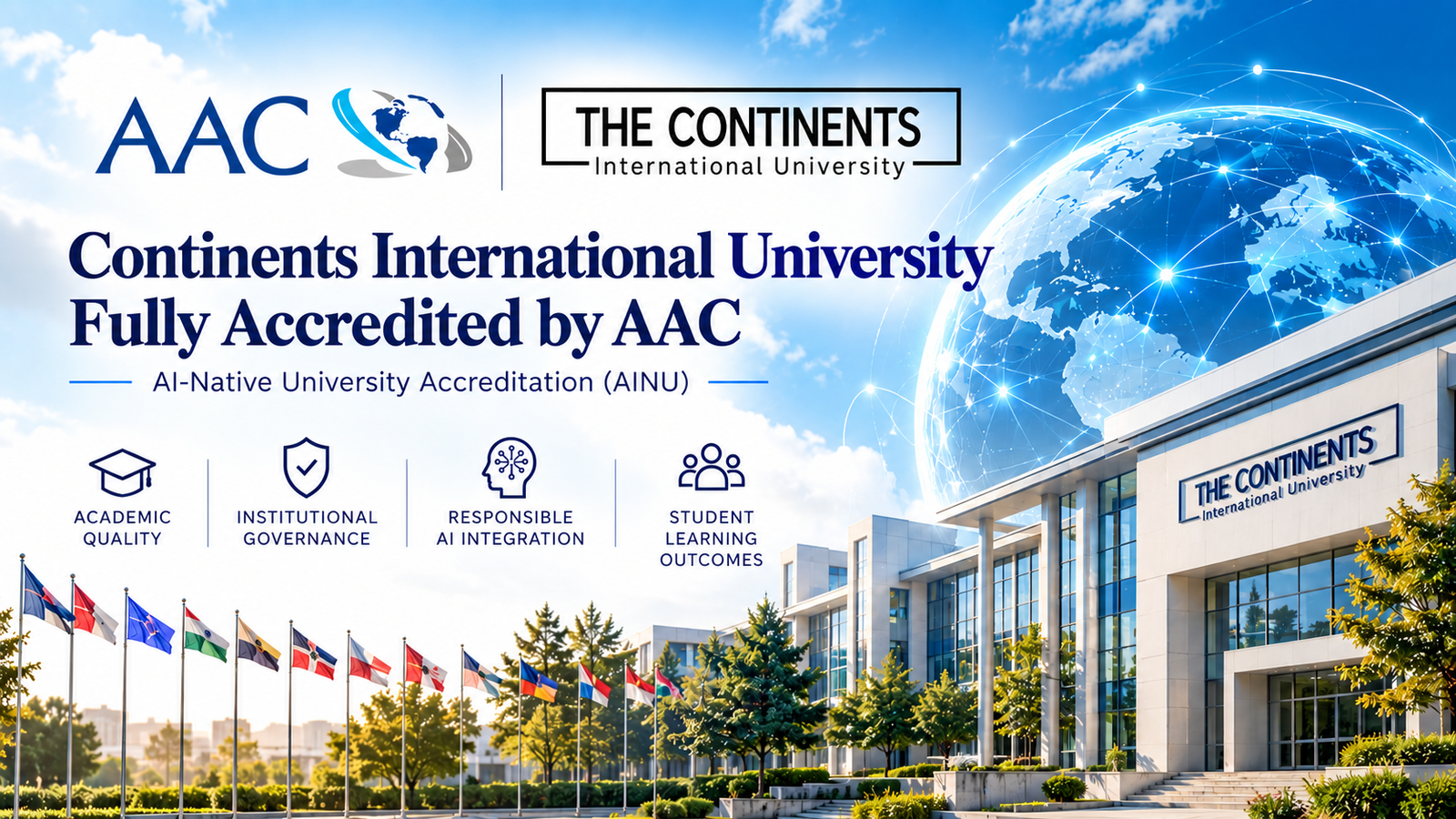
Continents International University Fully Accredited by AAC Through the AI-Native University Accreditation Framework

Continents International University is fully accredited by AAC through its AI-Native University Accreditation framework. The designation reflects an institutional review focused on academic quality, governance, student learning outcomes, integrity, and the responsible use of AI in higher education. For Continents International University, accreditation is part of a broader commitment to building a university model that responds to technological change without losing sight of academic standards. More information about the University’s status is available on its Licensing and Accreditation page. AAC is also developing its role around the future of quality assurance. As artificial intelligence becomes more integrated into universities, accreditation agencies will need to evaluate not only traditional academic standards, but also how institutions use AI responsibly, transparently, and effectively. That forward-looking approach may become increasingly important as higher education continues to change across borders, delivery models, and technologies. The University’s current accreditation record can be reviewed directly in the AAC Directory.

Read More
Awareness

Problem with Outdated University Education

University courses are only useful if they keep up with the field. Textbooks take years to write and publish. Curriculum review boards move slowly too. In fast-moving subjects like technology, health care, and public policy, a syllabus written five years ago can leave students studying ideas the industry has already moved past. This gap matters because employers hire people who can use current methods, not old ones. Students can graduate, start work, and find that their training does not match what the job requires. The cost falls on the graduate. Universities close this gap by reviewing course content often instead of waiting for a full curriculum overhaul. They check reading lists against recent research. They bring working professionals in to teach and advise. They ask graduates and employers what the program missed. Schools that do this through curriculum design that responds to feedback stay relevant longer. Students can protect themselves before enrolling. Ask when the course materials were last updated. Read the reading list and check the publication dates. Ask whether the program consults industry advisers, and what a competency-based curriculum looks like in practice. A school that cannot answer these questions is not paying attention to the problem. Before choosing any program, review how to judge whether a curriculum fits your goals. And consider delivery format as well: flexible online learning can make it easier to study while working, which matters most when the content is current.

Read More